
Pelletizing Lines
Pelletizing Methods Compared: Water Ring, Strand and Underwater
July 24, 2026 · 6 min read
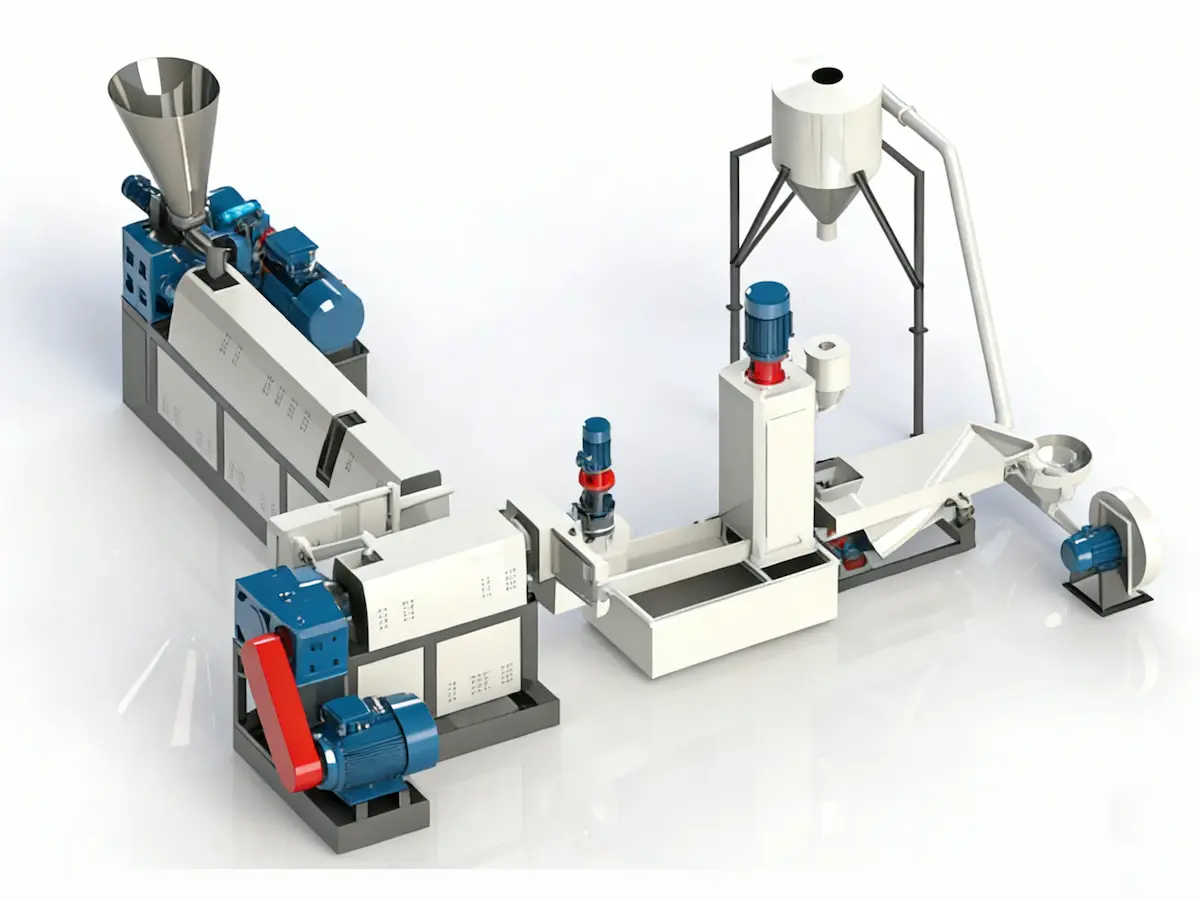
The cutting method on a pelletizing line greatly affects pellet shape, polymer degradation, machine life and operating cost. The right choice depends on your polymer, throughput and pellet requirements. Here is a practical comparison of the three main systems.
Water ring pelletizing
Cutter blades chop the strands at the die face while a ring of water cools the pellets. Because it works well with low-melt-strength polymers, it is the standard for PE/PP film recycling. It produces lens-shaped or spherical pellets, has a compact footprint and moderate maintenance. It is the easiest system to set up and the default on most film pelletizing lines.
Strand pelletizing
The melt exits through a die into a water bath, cools in long strands, then is cut into cylindrical pellets. This suits higher-melt-strength polymers such as HDPE, PP homopolymer, ABS and PET, and delivers consistent geometry. It needs more floor space for the water trough and is more expensive to operate, but it offers direct visual feedback that helps spot problems early.
Underwater pelletizing
The die plate is submerged and rotating knives cut pellets directly into the water, producing near-perfect spheres with a tight density distribution. It is ideal for high-volume lines (1,000+ kg/h) and premium applications such as food-grade rPET and compounds. The trade-off is cost: precision-ground die plates and cutter assemblies are far more expensive to buy and maintain.
Which one for your material?
For PE/PP film, water ring is the practical default — it balances cost, footprint and pellet quality. For rigid flakes like HDPE and PP regrind, strand pelletizing gives the consistent geometry downstream processes prefer. For very high volumes or premium pellets, underwater cutting is worth the investment.
| Parameter | Water Ring | Strand | Underwater |
|---|---|---|---|
| Pellet shape | Lens / irregular | Cylindrical | Spherical |
| Typical capacity | 200–800 kg/h | 100–1000 kg/h | 500–3000+ kg/h |
| Capital cost | Lower | Mid-range | Highest |
| Best for PET? | Less ideal | Most common choice | High-volume lines |
For most recyclers in the 100–800 kg/h range, strand pelletizing produces equally high-quality pellets with a significantly lower total cost of ownership than an underwater system.